
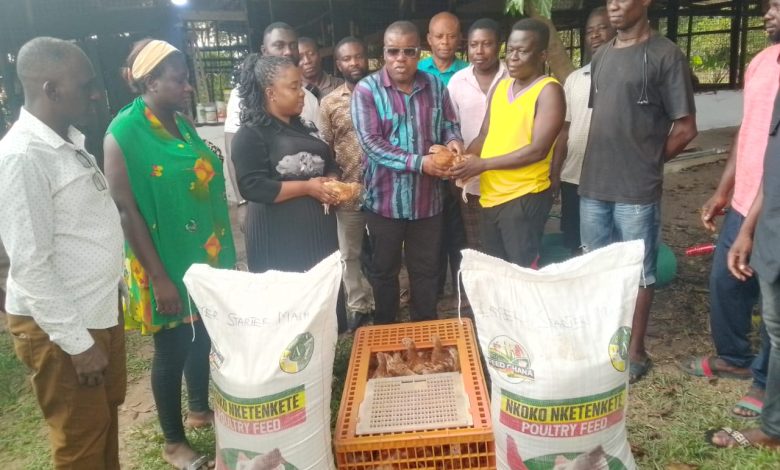
Feed Ghana Launches Nationwide Distribution of “Nkoko Nketenkete” Poultry Project
From Ernest Best Anane, Kumasi
The Ministry of Food and Agriculture, under the Feed Ghana Programme, officially began the nationwide rollout of the “Nkoko Nketenkete” poultry distribution initiative, marking a major step toward reducing Ghana’s reliance on imported chicken.
Speaking at a press conference in Kumasi, Mr. Bright Demordzi, National Coordinator of the Feed Ghana Programme, said the launch in the Ashanti Region would be followed by a phased expansion to all 16 regions as the intervention is necessary, urgent and economically transformative.
According to him, the government is determined in reversing a decade‑long import dependence and rebuilding the poultry value chain from breeding to marketing.
He explained that prior to the Feed Ghana Programme’s launch in 2025, Ghana’s poultry sector produced less than five percent of the nation’s demand, and that about 15,000 metric tonnes per year, while the country imported over 300,000 metric tonnes annually, costing roughly US $300 million in foreign exchange.
He noted that the shortfall had led to pressure on foreign reserves, the collapse of many local farms and job losses across the feed, hatchery, processing and distribution chains.
He disclosed that President John Dramani Mahama introduced the flagship “Nkoko Nketenkete” project in Kumasi in November 2025. The scheme supplies anchor farmers with day‑old chicks, feed, vaccines and veterinary medicines, backed by four weeks of intensive brooding support to minimize mortality and urged participants to adhere to strict biosecurity and extension guidelines.
He stated that the programme projections, the initiative could cut poultry imports by 10–15 percent in its first phase, saving between US $30 million and US $60 million annually.
Mr.Demordzi stated that it is also expected to create tens of thousands of jobs in feed milling, hatcheries, veterinary services, transport, processing and marketing, while stimulating domestic maize and soya production.
He disclosed that the Beneficiary registration forms have been sent to all Metropolitan, Municipal and District Assemblies, with agricultural departments assisting applicants. Says the first distribution began in Ashanti and will continue across the country as capacity allows.
According to him, the programme prioritises youth and women‑led enterprises, small‑ and medium‑scale farmers, and those willing to comply with animal‑health and biosecurity standards.
The National Coordinator stressed that Mr Eric Opoku, Minister for Food and Agriculture, expressed his support and the Ministry are commitment to sustaining the momentum, scaling production and working with all stakeholders to build a resilient, competitive and self‑reliant poultry industry for Ghana.
He expressed the view that if the project scales as anticipated, Ghana could halve its poultry import bill within a few years, moving closer to self‑sufficiency in chicken meat and eggs while strengthening the country’s import‑substitution agenda.


